
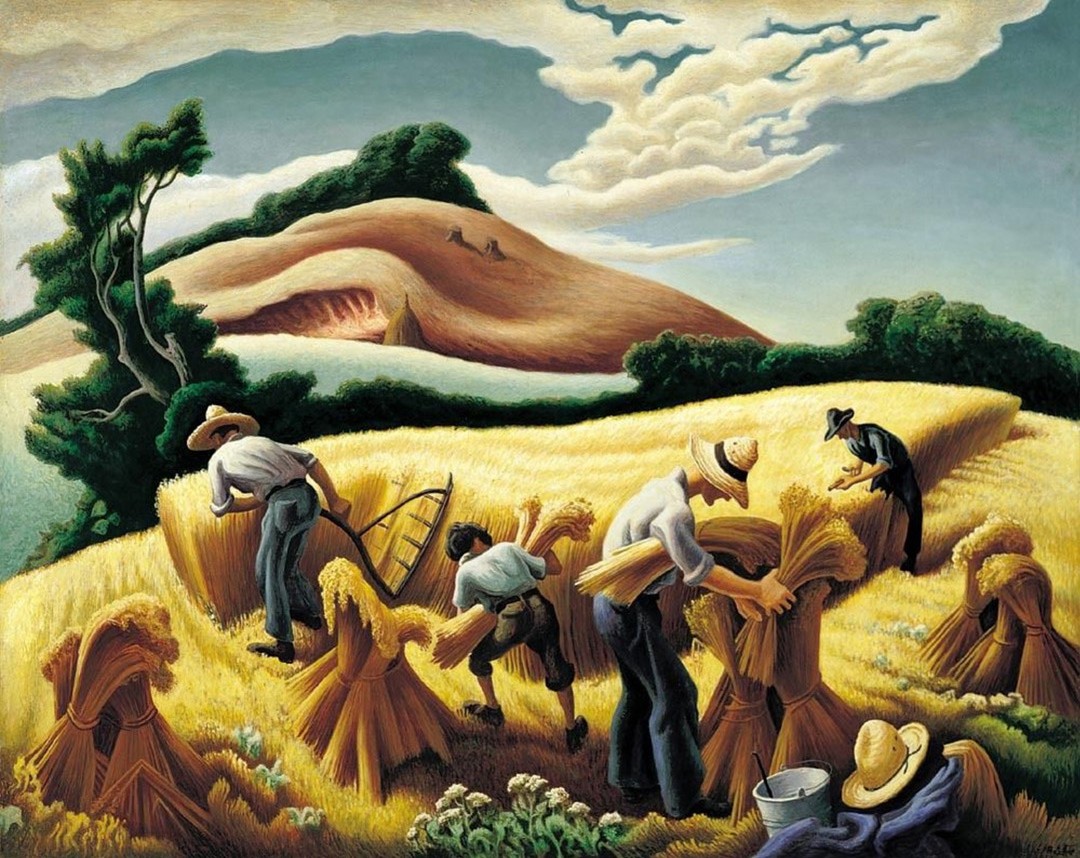
“[Jesus] said to his disciples, ‘The harvest is plentiful, but the laborers are few; therefore ask the Lord of the harvest to send out laborers into his harvest’” (Matt. 9:37-38). It sounds like he might be asking his disciples to pray that someone else be sent to labor in the harvest, that someone else be sent to do the difficult, inconvenient work of ministry to the harassed and helpless so the disciples could maintain their interest in a sanctuary close to their master. But the cost of discipleship is to set aside self-interest, to go into the field, and serve the interests of our sisters and brothers, no matter how difficult and inconvenient the labor may be.
When Bishop Miller preached here two weeks ago, he made two points especially worth remembering. First, he diagnosed the deep political and social turmoil we experience today as the loss of authentic community, the result of trading the sanctuary of true belonging in a larger, more inclusive community for the illusion of independence in a private faith. It’s a problem that has been brewing for years.
A quarter century ago, in his book Bowling Alone, political scientist Robert Putnam argued that the networks, trust, and habits of civic participation connecting people in America have significantly declined since the 1950s, and we have become increasingly disconnected from one another, even as we try to engage in some social activities individually. We have retreated from healthy community into a false sanctuary of separation and individuality. We don’t need a political scientist to tell us that; the evidence is all around, and it’s plain to see.
The second point the bishop made is that the antidote to the chaos in our world is to rebuild authentic community by caring for one another eye to eye, face to face, and making sure everyone has a place at the table. Our main source of hope, Putnam noted, is that our experience of healthy community is not lost forever; it can be rebuilt with a deliberate renewal of community life. We can reinvest in civic institutions like clubs, associations, neighborhood groups, religious institutions, and volunteer organizations; we can create opportunities for connection that encourage participation, trust, and collaboration; we can learn from other civic renewals that we have experienced before.
The place to begin, Putnam argued, is locally, with neighbors whose names and stories we know and with whom we can work together side by side. The place to start is with intentional reconnection, rebuilding the habits, institutions, and shared spaces that help people trust one another and live together in healthy, life-affirming, life-enhancing community. The place to start is by truly valuing our neighbors, no matter our differences; by trusting they have an essential role in God’s creation, even if we don’t know what that role is; by recognizing that until they are made whole, none of us will ever be made whole; and then by acting accordingly, by turning our values and vision into an ethic of behavior in our relationships. Isn’t that what the church is about?
At Holy Trinity we say, “We are here to nurture relationships here, near, and far so everyone may live abundantly.” The abundant life Jesus offers (John 10:10) comes with the responsibility that we roll up our sleeves and work to invite others into that life. We are not here to be entertained by great organ and choral music, or to sing the stirring hymns of our faith, or to be inspired by a sermon, although each of those experiences has its proper place. We are here to demonstrate to the world that there is a deeply life-giving way to be in relationship with one another that offers a viable alternative to the way the world offers.
We don’t need to pray that God will send others to do that work. We need to pray that we will hear and respond to God’s call to do that work ourselves. Jesus asked his disciples to pray that God would send laborers to further his ministry, then he gave them the authority to do the work, and he sent them out to do it. Jesus called disciples not merely to learn from him and hope for a better life one day; he called them to make that better, eternal life real in the world around them, and he equipped them with everything necessary to do that work.
One of Luther’s core principles was what he called the “general priesthood of all baptized Christians.” He believed that all who have faith in Christ and are baptized are designated priests and share in Christ’s royal priesthood, and that every believer has the responsibility to act as a priest and minister to others (cf. 1 Pet. 2:9).
The tradition in which I was ordained puts it this way: “all Christians are called to minister wherever Christ would have them serve and witness in deeds and work that heal and free.” “The people of God [that’s everyone, clergy and laity alike], who are the church made visible in the world, must convince the world of the reality of the gospel or leave it unconvinced. There can be no evasion or delegation of this responsibility; the church is either faithful as a witnessing and serving community, or it loses its vitality and its impact on an unbelieving world” (The United Methodist Book of Discipline, para. 128, 130).
Our greatest fear should not be that we cannot support a budget, or that we are unable to maintain this magnificent building for worship and ministry, or that we may cease to exist as a congregation. Our greatest fear should be that when we see those who are harassed and helpless, like sheep without a shepherd, we settle for praying that God will send someone else to care for them; that when we see the homeless, we merely pray they find shelter; that when we see the hungry, we do nothing more than feel them tug at our heart; that we become those who merely hear the word of life and don’t embody it in everything we do, in every encounter we have with others (James 1:22-25).
Our greatest fear should be that we become comfortable and content to live without the fire, power, excitement, and spiritual passion for the gospel that make us great. And our prayer for help with life’s challenges should always include our recommitment to the challenging and inconvenient work of ministry to which we are called, so that everyone here, near, and far may live abundantly.

 The Sauntering Pilgrim
Leave a comment