
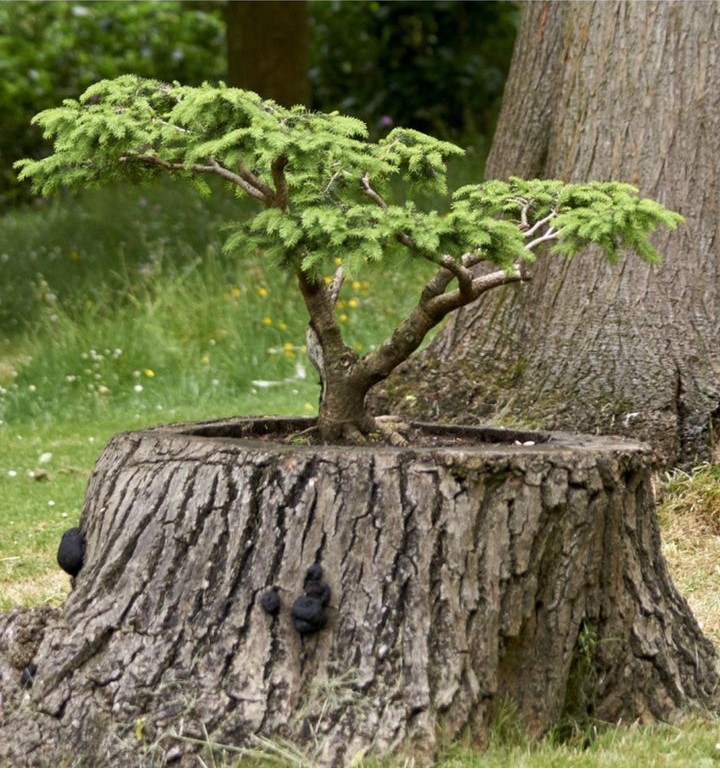
We live on the horns of a dilemma. On one hand is the opportunity and responsibility to cultivate the best of the past and continue to harvest its rich blessings. On the other hand is the opportunity and responsibility of God’s invitation through the prophet Isaiah, “Do not remember the former things, or consider the things of old. I am about to do a new thing; now it springs forth, do you not perceive it?” (Isa. 43:18-19).
In our most difficult and pregnant choices, the ones in which we’re most aware of great change in our life, we cannot serve the past except by denying the future, and we cannot serve the future except by denying the past. Those are the hard choices that define who we are and help do so much to shape our future.
In a critical season in Israel’s history, when the Northern Kingdom had been annexed by Assyria and Judah lived uneasily in its shadow as a tributary, when Isaiah recalled the prelude to the nation’s final collapse and exile into Babylon, he surveyed the remnants of the past and found a sign of hope. “A shoot shall come out from the stump of Jesse, and a branch shall grow out of his roots” (Isa. 11:1). Deep in defeat, Isaiah knew something new would emerge; the debris of loss would become a fertile field from which a new creation would spring up.
It’s difficult to face the prospect of significant loss when we’d like to hold on to the best of what seems to be slipping away and know we can’t. Heartache accompanies change imposed from outside and without our consent, and inner turmoil accompanies change we must make, don’t want to make, and can’t avoid making. Even when we initiate and participate in such changes, the choices are often hard to make.
It would be helpful to know what new thing is just over the horizon. But as Pastor Jeff said last week, what arrives, especially from God, is usually nothing like what we expect. Even when it’s better than we expect, it’s also different, so it’s easy to miss, hard to recognize when it arrives, and easy to dismiss as irrelevant or even threatening. And because big changes usually begin in small ways, the signs of their coming can be hard to recognize and embrace creatively.
Take for example our financial stewardship as a congregation. For generations we’ve been blessed with substantial resources for ministry. We have built and maintained an imposing building as a center of ministry; we’ve expanded it with a beautiful chapel and fellowship center; we have contributed significantly to ministry in the surrounding community and beyond; and we’ve been entrusted with a substantial endowment to support our ministry today and in the future.
Now, because of a changing economy, shifts in community and congregation demographics, and evolving cultural and religious expressions, we find ourselves in uncharted territory where, in the words of an Irish folk song, “the past has been lost and the future has still to be won.” The financial stewardship of our members, generous as it is, supports only about half the cost of our ministry, and to preserve the endowment that supports the other half, we’re having to trim back some of our ministries. The seeds of that decision were planted long ago; they’ve been steadily growing; and they can no longer be ignored. Change is coming and is upon us now.
But hard challenges have always been part of life, and just as new life and new faith have always emerged from what has gone before, so they are already emerging from what we have known, a shoot from the stump of Jesse, a new branch growing from the roots of the past. God is doing a new thing, and even now it springs forth, waiting to be perceived.
Our ministry with the Burrito Project, for example, recently caught the attention of a non-member friend who donated more than sixty hand-crafted items to support our homeless and hungry neighbors. Emerging relationships in the community have brought Breadcoin to our doorstep, a new and more choice-giving way to affirm and feed the Christ who comes to us in those who are hungry. A serendipitous convergence of needs and resources has given us a new possibility to collaborate in using our building at 1092 Main Street in a creative, multifaceted outreach in the community. And member responses to this year’s financial stewardship campaign have so far be encouraging.
In the midst of their journey from Egypt to the promised land, from slavery to the past toward a new and divinely inspired vision of abundant life, Israel encountered some tough going, when their resources seemed inadequate and their vision of the future failed. Their trust in what God promised faltered, and the memory of their past beckoned. They wanted to return to what they had known. They wanted to be what they remembered they had always been. The past wasn’t as good as they remembered, but at least it was familiar territory where they knew what to expect. Thank God, they did not turn back but kept their eyes on the prize that awaited them, and they continued on their journey.
The same thing happened in their national defeat and exile to Babylon. The nation they had built with God’s guidance was collapsing. They mourned the loss of the life they had known, a life they knew was slipping away, and they were faced with a bleak and uncertain future. Then Isaiah raised a vision of renewal, a sprig of green growing from the remnants of the old. It was merely a hint of the new thing that was to come, but around that small suggestion of hope, a new nation would arise and a new center of faith would be built. There a messiah would offer the abundant life they imagined, more and better life than they ever dreamed of.
Despite the uncertainty of these days, I’m resolved not to dwell in the past, nor try to preserve it, nor recreate it in familiar form. Instead, I’m going to look to the opportunities and responsibilities of an emerging future, a future that is yet unknown, and I’ll remember the words of Habakkuk: “Though the fig tree does not blossom, and no fruit is on the vines; though the produce of the olive fails and the fields yield no food; though the flock is cut off from the fold and there is no herd in the stalls, yet I will rejoice in the Lord; I will exult in the God of my salvation. God, the Lord, is my strength; he makes my feet like the feet of a deer, and makes me tread upon the heights” (Hab. 3:17-19).

 The Sauntering Pilgrim
Leave a comment