
Forgive me, Philemon, for the impertinence of intruding into your correspondence with Paul, but something he wrote in his letter to you struck a chord that seems relevant to all of us who try to live a life of faith in Christ.
It’s not about your relationship with your slave Onesimus, who became such a friend to Paul in his imprisonment, nor is it about slavery as an institution, though I’m sure Paul would have much to say on that subject. It’s not even about what slavery represents: the injustice of exploiting workers for the advantage of the wealthy and powerful, and the arrogance, disrespect of others, and idolatry upon which that exploitation stands.
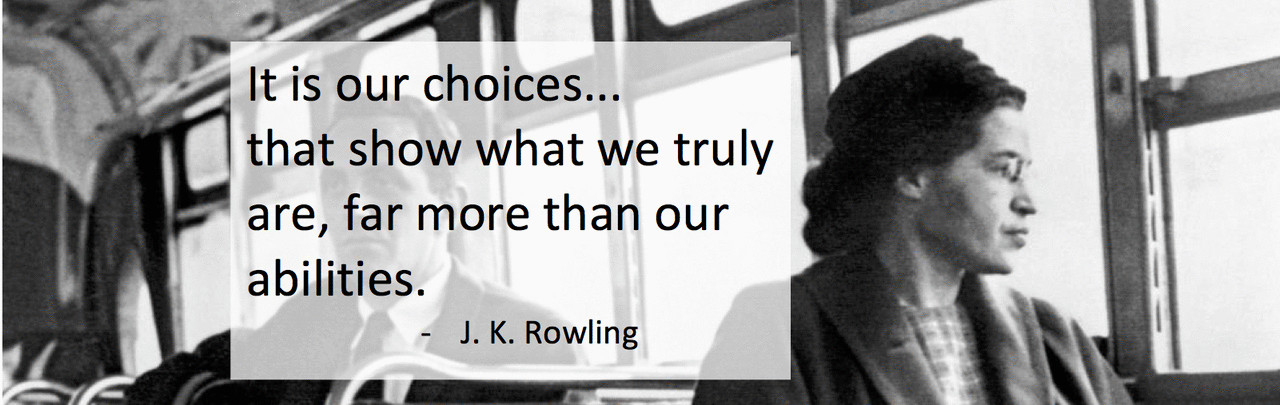
Rather, it’s about the graceful moment of opportunity that came to you when you had to make a choice about your relationship with Onesimus. It’s a choice that eventually comes to each of us, not once but repeatedly, as we grow toward maturity in faith. It comes every time we must choose the authority and center of values that will inform the decisions we make and the direction our lives take.
Paul put his finger on it when he wrote, “though I am bold enough in Christ to command you to do your duty, yet I would rather appeal to you on the basis of love” (vv. 8-9). Will you do what’s right, Philemon, because you’re commanded to do it or because you know in your heart it’s the right thing to do?
As I’ve grown in faith, I’ve learned there is a choice that revisits us at critical moments – like the choice Paul set before you, Philemon – and those critical moments come every day. It came to you when you had to choose what to do about your relationship with Onesimus. It’s a moment that often knocks on my door, as it does on the door of every person who’s trying to live a life of authentic faith. It’s a defining choice that continually shapes our nature and our character, our present and our future.
The critical moment is not when you decide to accept Jesus Christ as your Lord and savior, as the so-called evangelicals like to frame it, are baptized, and begin a conscious, intentional life of discipleship with Jesus. It’s not when, like those first disciples, you leave your livelihood and family to follow an itinerant rabbi and his vision (Mark 1:16-20; Matt. 9:9). It’s not when you stand at the threshold Jesus sets when he says you can’t be his disciple unless you give up all your possessions, sell them, and give the money to the poor; then come, follow him (Luke 14:33; Mark 10:21) – although all such moments are important.
The critical moment, I believe, is any moment in which we choose to do the right thing not because some external authority or influence commands us to do it but because, difficult though it may sometimes be, it flows naturally and gracefully from the center of who we are, from the law of life that Jeremiah said is written on our hearts (Jer. 31:33) – because, being who we are, we can do nothing else. The moment came to you, Philemon, when Paul invited you to welcome Onesimus back not as a slave but as a “beloved brother,” to choose a relationship based not on power, privilege, and rights, which are all external things, but one based on love, which arises from the inner identity we all share at the deepest level of our human nature.
Twenty-five years ago, a popular question circulated in the church around here, a question meant to guide our choices every day: “What would Jesus do?” You could wear a wrist band or other apparel with the letters “WWJD” to remind you to let Jesus be the authority or influence that would guide your choices.
As I’ve grown toward maturity in faith, however, I’ve discovered that “What would Jesus do?” ceases to be a relevant question. The question that matters becomes instead, “What will you do?” “What will I do?” At the start of discipleship, our authority is Jesus, and rightly so. But there comes a moment – and you were at such a moment, Philemon – when the authority for our lives moves from outside to inside, when our authority becomes, not someone after whom we model our faith, but the law of life that’s written on our hearts, which no one can teach us but which we must uncover at the core of who we are.
Obedience to the command of Paul, obedience even to the command of Jesus, keeps us in an entry-level faith, so that we never grow to maturity, to what Paul called “the measure of the full stature of Christ” (Eph. 4:13). Or as Eugene Peterson paraphrased it in The Message, we never become “fully mature adults, fully developed within and without, fully alive like Christ.” As long as we model our lives after someone else, even after Jesus, we never become the genuine, honest-to-God, gracefully eccentric persons God is creating us to be.
I don’t know how you chose, Philemon. Did you choose on the basis of law or of love? Did you welcome Onesimus back as a slave or as a brother? But this much I do know: the choice you faced is the same choice we all face today. Will we be ruled by an external authority – by a law written on tablets of stone, or a favorite religious tradition, or the pressure of social conformity, or the judgment of those we respect, or the latest culture influencers, or the behavioral norms we learned in childhood or youth, or even by Jesus himself?
Or will we listen to the inner whisper, the deep yearning that begs to be satisfied, the yearning that can be satisfied only by love? Will we learn to see others as the gift of creation they are, knowing that our wholeness and wellness depend on the wholeness and wellness of the least of our neighbors, so that all forms of power over others are surrendered and we live as the brothers and sisters we are?
So you see, Philemon, the choice Paul set before you is the choice our faith sets before me and before all of us. And the only thing that’s uncertain is how we will choose.


 The Sauntering Pilgrim
Leave a comment