
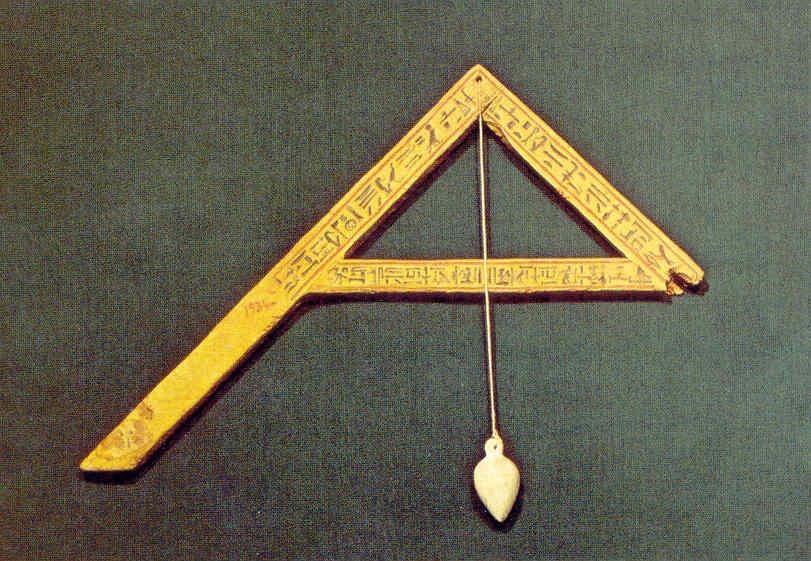
“Then the Lord said, ‘See, I am setting a plumb line in the midst of my people’ (Amos 7:8).
The plumb line God set in ancient Israel (Amos 7:7-15) – the reference point or standard that would reveal the values around which their life had been built – revealed a nation skewed so far out of plumb, it needed radical reconstruction. More than it needed a version of the TV show Fixer Upper, it needed an Extreme Makeover: National Edition, the demolition of what they had built according to their values and a rebuilding according to God’s values.
If Israel’s situation seems more than a little like ours, congratulations: you’re awake. It seems clear that something is terribly wrong with the way we are living. Here’s the way one observer described the situation we’re facing:
“. . . a concentrated manifestation of the political violence that is all around us now. By political violence, I mean acts of violence intended to achieve political goals, whether driven by ideological vision or by delusions and hatred. More Americans are bringing weapons to political protests. Openly white-supremacist activity rose more than twelvefold from 2017 to 2021. Political aggression today is often expressed in the violent rhetoric of war. People build their political identities not around shared values but around a hatred for their foes . . . . A growing number of elected officials face harassment and death threats, causing many to leave politics. By nearly every measure, political violence is seen as more acceptable today than it was five years ago.” (Adrienne LaFrance, “The New Anarchy,” The Atlantic, 6 March 2023).
The crumbling of our national social and political structures provides all the evidence we need that radical change in the way we live together is necessary and long overdue.
The solution to our problems, however, does not begin – must not begin – with quick, radical demolition of what we have, a demolition some politicians and candidates for office today advocate and promise to deliver. We need to start not with change but with the plumb line, the standard by which we evaluate our life and design changes that are necessary.
The plumb line nearly every politician talks about is based on law, at least the common understanding of law – law that regulates behavior, describing and enforcing lots of dos and don’ts to create the kind of life desired by those with the power to make it happen. It’s a system of law based on rewards and punishment. A good example is a “No Trespassing” or a speed limit sign. Violate that kind of law, and society imposes punishment.
But there’s another kind of law, and it’s not based on setting limits to create an ideal life; it’s based on respecting the ideal life we already have, the reign of God that is already spread out on the earth, waiting only to be seen and embraced (Gospel of Thomas 113; Mark 1:14-15). It’s a description of the way creation works. A good example is the law of gravity. If I disrespect the law of gravity and jump off the roof, I’ll pay a price for my choice. Another example is in one of St. John’s letters, “Whoever does not love abides in death” (1 John 3:14). If I fail to value every other person and element of creation profoundly and equally – as essential to the whole – something essential in me will die. Like it or not, that’s the way life works.
This kind of law started out simply, with only one rule: don’t eat “of the tree of the knowledge of good and evil” (Gen. 2:16-17). Enjoy everything in creation – everything – but don’t get caught distinguishing between good and evil; just appreciate everything alike.
Then came the Ten Commandments, to which people soon added 613 others, with thousands more since, so many dos and don’ts it’s impossible to keep track of them all, much less obey them. The more laws people tried to obey, the worse things became, until God made the law simple again: love God with everything you have and everything you are, and love your neighbor as yourself (Mark 12:29-31). Paul simplified it further: “Owe no one anything,” he wrote, “except to love one another; for the one who loves another has fulfilled the law” (Rom. 13:8).
In making most of our nation’s laws, I believe, people are motivated by what they believe is right, but we have to look around and ask how that’s working for us. It’s clearly not working very well, and imposing more laws and harsher sanctions is not going to make it work any better. It’s only going to prove our insanity – that we keep trying the same approach over and over, expecting different results. Einstein warned us we’ll never get out of the problem we’re in by using the same way of thinking that got us into the problem to begin with. Something else is needed, and that’s where the church comes in, not to impose a better way as a new law, which would be nothing but more of the same, but to offer a better way as a living example that there’s another way to live.
God has set a plumb line in the midst of our nation today, and the church is called to be that plumb line. We don’t lay down rules that must be obeyed to avoid God’s punishment; we offer up an example of how to live in harmony with the way creation is made to work. We’re here to show others it’s possible to live well not by controlling others but by valuing others, not by getting others to think or act alike but by inviting others to love alike. We don’t need to enforce old laws or create new ones; we need to embody the ancient law of love.
Here’s how we do that. When someone is thirsty, we offer a cup of water; when someone is hungry, we provide a meal or open a Little Free Food Pantry or partner with FeedMore Western New York; when we meet a stranger, we don’t test their immigration papers, we offer them the hospitality of a safe place to stay; when someone is ill, we make sure they have basic medical care; when someone is in prison and isolated from society, we visit that person, making sure healthy human connections are maintained (Matt. 25:31-46).
We live according to the law of love when we satisfy any human need, not checking to see whether the person we help is worthy of help, but simply providing the help people need for living a basic human life. We live according to the law of love when we create a community in which wealth and resources are shared fairly among all persons, a community in which, as Paul described it, the one who has much does not have too much, and the one who has little does not have too little (2 Cor. 8:13-15).
When our lives are aligned with the basic principle of love that governs all of creation, we naturally draw people to us without having to impose anything on them. Here at Good Shepherd Lutheran Church, for example, our ministry of loving the hungry by feeding them recently elicited $600 of support from the Boston Lions Club. When we do the right thing according to the law of love, we stoke an impulse to love that’s naturally present in those around us. If the plumb line we hold up to those around us demolishes anything, it does so by freeing us and our neighbors from ways of life that are passing away so we can live in the ways that lead to eternal life. ▪

 The Sauntering Pilgrim
Leave a comment