
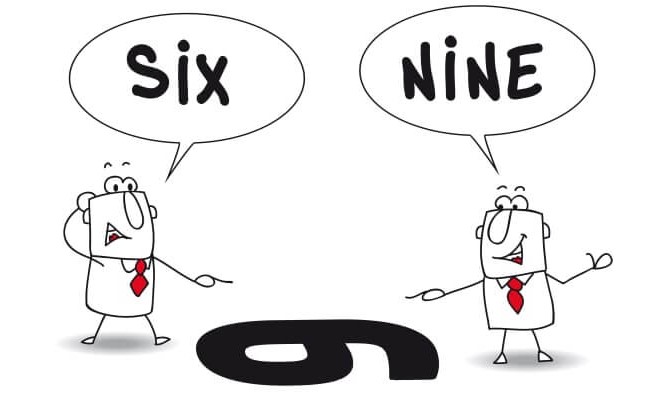
Some who claim a seat at the table with other Christians appear to be attempting to narrow the grace of the gospel, or narrow it even further than they have already done. According to a report on Ministry Watch (ministrywatch.com), “The Presbyterian Church in America (PCA) will spend the next year investigating the book ‘Jesus Calling’ to assess its ‘appropriateness for Christians.’ [Note: the PCA is not to be confused with the Presbyterian Church (U.S.A.) – PC(USA) – with which our neighbors at Buffalo’s Westminster Presbyterian Church, for example, are affiliated.]
“This decision was made last week at the denomination’s 51st General Assembly (GA) in Richmond, Virginia. According to its website, GA is held each year for pastors and church leaders in the PCA to ‘discuss, debate and decide biblical and ministry issues.’
“Benjamin Inman, a pastor from North Carolina who has had long-standing issues with the book, introduced the investigation at GA through a measure called an overture. The overture states that the book ‘promotes ostensibly grave errors and has been firmly rejected by influential public figures within, and theologically akin to, the PCA.’
“Some pastors expressed concerns that the way Young writes the book as the voice of Jesus could take away from ‘sola Scriptura,’ the concept of the supreme authority of Scripture.”
Accusations levied by Inman and others in the PCA appear to have missed the point of Young’s book (and others that followed in the series). In her introduction, Young affirms, “The Bible is the only infallible, inerrant Word of God, and I endeavor to keep my writings consistent with that unchanging standard. I have written from the perspective of Jesus speaking, to help readers feel more personally connected with Him.” She concludes by stating, “The devotions in this book are meant to be read . . . with your Bible open.”
The folks of the PCA, I believe, miss the mark in at least these two ways. First, even as I affirm the Bible as the inspired word of God, I also affirm it to be a living thing, a story told in many contexts by people of faith throughout millennia, people who had varied and growing understandings of their experiences with God. People of each generation used their experiences of God as lenses through which to view and interpret scriptures produced by previous generations. They understood the scriptures to be living and growing documents of a living and growing faith, and they weren’t afraid to be imaginative and experimental in how they searched the scriptures for better understanding and deeper faith. Young writes in that longstanding and credible tradition.
The second way in which our friends in the PCA miss the mark is in viewing Jesus and the scriptures as immutable, adhering to an ancient and unalterable standard of interpretation. It’s a view that contradicts Jesus’ own experience and viewpoint. Only twice in the Christian gospels is Jesus said to be amazed at someone’s faith, and both of the persons whose faith amazed him were from outside his faith tradition: a centurion in the Roman army (Matt. 8:5-13) and a Canaanite (i.e., Gentile) woman (Matt. 15:21-28).
Jesus’ faith and his sense of his mission were reshaped by those two encounters. Until his interaction with the Canaanite woman, he understood he had been sent “only to the lost sheep of the house of Israel,” only to adherents of the Jewish faith (Matt. 15:24). After he was amazed by the woman’s faith, he finally saw his gospel as intended for the whole human family, Jew and Gentile, so that he sent his disciples to “make disciples of all nations” (Matt. 28:19). It happened for Jesus and so must certainly happen for us, that our relationship with God and with the Christ alive within each of us is deepened and significantly enriched by those whose perspective on God is significantly different from ours.
My faith has been enriched and expanded by those whose faith is different from mine, and by my willingness to be challenged by open dialog with them. I have no fear of the diversity of faith the folks of the PCA seem to be defending against. In fact, I count it a blessing.

 The Sauntering Pilgrim
Leave a comment