
The question Nicodemus asked was only slightly different from the one you and I might have asked. “How can anyone be born after having grown old?” (John 3:4). Another version might be, “Once I’m settled in the familiar ways of the world, how can I give everything up and begin a whole new life?” Or still another, “I’ve made such a mess of my life, so many bad choices, is it possible to start over?”
If we heard Isaiah tell of his life-changing vision in the temple – flying seraphs, shaking thresholds, billowing smoke (Isa. 6:1-8) – we might ask, “How can I have a life-changing experience like that?” If we heard disciples tell of their Pentecost experience – a sound like the rush of a violent wind, divided tongues like fire, and being filled with the Holy Spirit (Acts 2:1-4), we might ask, “How can I get that kind of spirit and have what they had?” If we heard Jesus say he came that we might have “more and better life than [we] ever dreamed of” (John 10:10 The Message), we might have asked, “How can I have that kind of life?”
It seems we’re not finished with Pentecost, or Pentecost is not finished with us. There are loose ends to wrap up, and I still have questions. Why have I never had a breath-taking, earth-shaking, heart-rending encounter with God like Isaiah? Why have I never been bowled over and knocked to the ground like St. Paul?
People do have such experiences, it’s just they’re not the usual experiences of grace. For most of us it’s different. We read Thoreau or Mary Oliver, go to the beach, plant gardens, seek wisdom in sunsets, take long walks in the country, and wonder just what we’re doing in life. Like Nicodemus, we discover transformation never comes simply by searching for it, and we end up with lives that are, well, ordinary. But I’m beginning to appreciate how full of blessings the ordinary life is. It’s the ordinary life where the Spirit of God loves to dwell.
In his ballet suite The River, Duke Ellington used music to describe the progress of a river from its source in a spring, as it grows from a rivulet to a mighty river, until it finally flows into the sea. For him, that was a metaphor for human life. Like streams, we begin life modestly; we grow, changing our nature and our direction; we encounter diversions and obstacles along the way; and we deepen and slow our life’s pace as we finally join the great sea of the universe. Our lives follow naturally the course God has laid out for us. It’s a course so ordinary and familiar and common to all people, we don’t think much of it, but it’s the course of life, and it flows always and unerringly toward the sea, toward God.
And all along the way, as the psalmist writes, God’s goodness and mercy follow us (Ps. 23:6). Except that “follow us” is too mild a translation of the Hebrew. Rather, God’s goodness and mercy chase us down like a hound of heaven, hot on our heels, dogging us through all our wandering ways, until they chase us right into the arms of God. God’s goodness and mercy rarely blast our eyes with great visions or overwhelm us with breathtaking experiences, but they stay close to us in the smallest routine, day-to-day events as we grow up and grow older and grow richer with the blessings of a generous God.
“How can those great, life-changing experiences of the Spirit happen to me?” is the wrong question. Our daily life is our experience of the Spirit, and it’s happening to us with every breath we take. Our experience of life may be punctuated with brief flashes of insight or blessed with moments of inspiration when our hearts are strangely warmed, but like a great river meandering toward the arms of the sea, we travel daily, unknowingly, immersed in more and better life than we ever dreamed of, the way laid out by the God who both pursues us from the beginning and waits for us at the end.
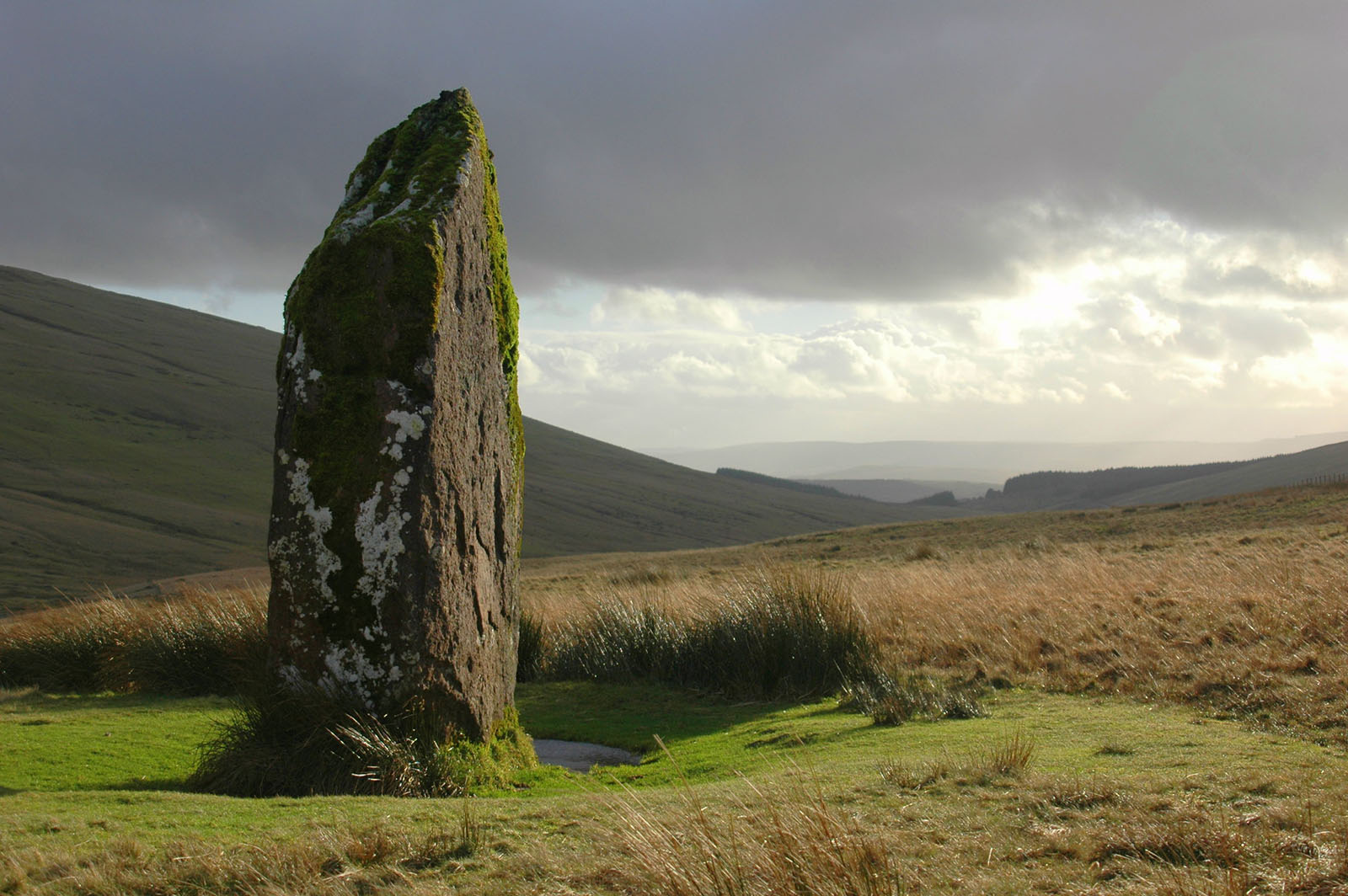
We live a great sweep of life, the sacred disguised as the mundane, the holy masquerading as the ordinary. Along the way, we raise Ebenezers (1 Sam. 7:12), stones to mark our progress: birthdays and anniversaries; baptisms, first communions, confirmations; graduations and retirements; beginnings, middles, and endings of all kinds. We raise them – a first communion, a confirmation – not because they’re all that important (they’re not) but because along the way they remind us of a choice we made, a series of them, that brought us to this moment.
And the choices we made that brought us here will guide us in the next choice we will make, and the next, and the next after that. It’s the choices we make that make our lives and reveal or mask the abundance with which we are blessed daily. It’s the choices we make that awaken us to the abundant life we’re living and that sweep us along in a great river toward a home not made with hands but eternal in the heavens (2 Cor. 5:1). ▪

 The Sauntering Pilgrim
Leave a comment