
When despair for the world grows in me
and I wake in the night at the least sound
in fear of what my life and my children’s lives may be,
I go and lie down where the wood drake
rests in his beauty on the water, and the great heron feeds.
I come into the peace of wild things
who do not tax their lives with forethought
of grief. I come into the presence of still water.
And I feel above me the day-blind stars
waiting with their light. For a time
I rest in the grace of the world, and am free.
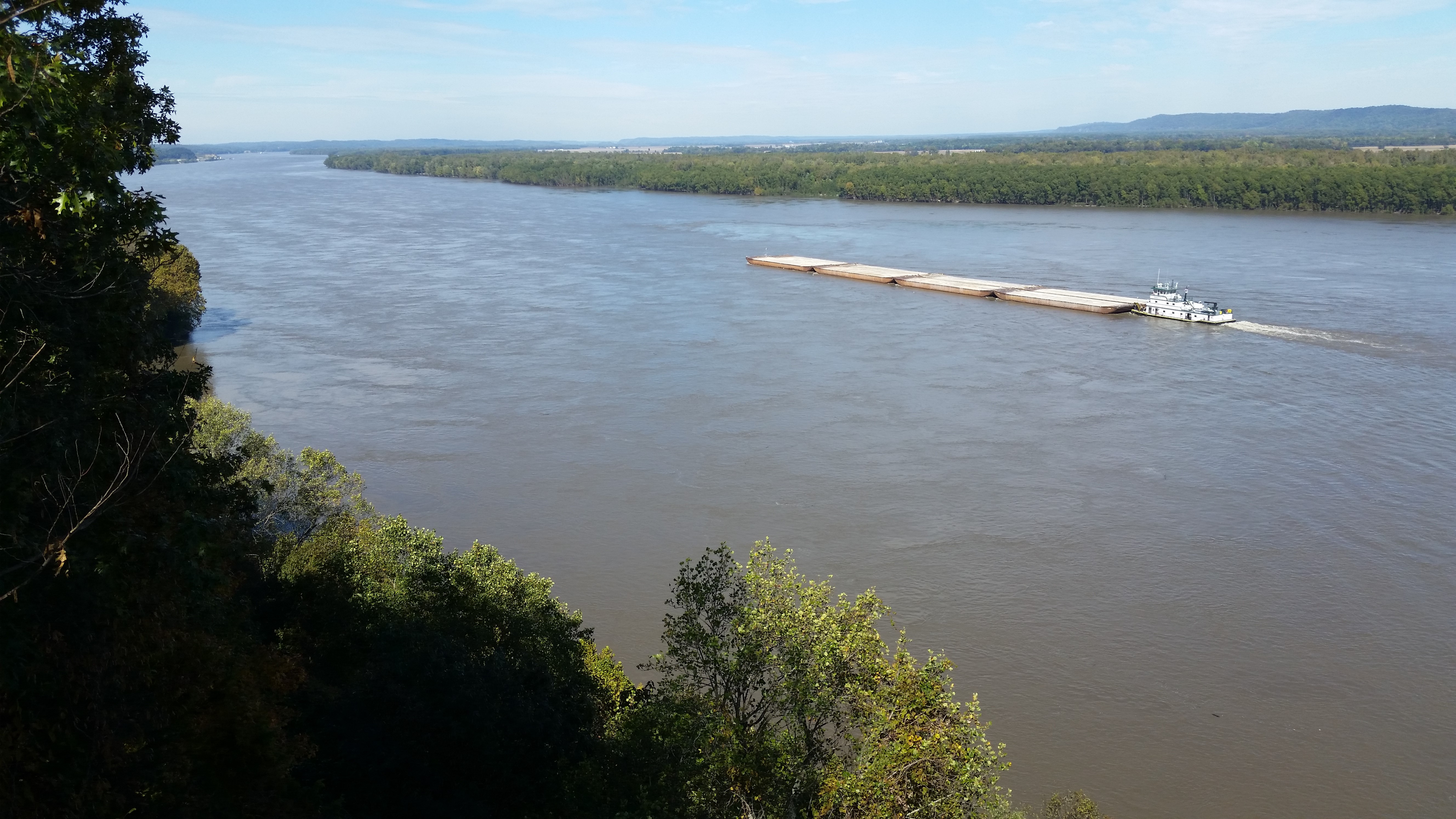
When despair visited farmer-poet Wendell Berry, he would rest in “the peace of wild things” (“The Peace of Wild Things”). The place where I rested in peace as a young man was a high limestone promontory in Southeast Missouri that overlooks the Mississippi River and the Shawnee Forest. I would sit alone at the edge of the river that, as the song goes, “just keeps rollin’ along,” where tows pushed their barges upstream or down, where sycamores grew and the pungent aroma of backwater reminded me of my connection with the earth. I have found other sanctuaries from despair, but none like that one.
We all have sanctuaries, places of safety and security where we find and reground ourselves. It might be a physical place like a favorite garden, a corner chair, a forest path. Maybe it’s an inner closet where we can breathe our own strength and feel our own certainty. It might be that feeling we get when we read a book and know it’s changing our life. Or it might be in listening to a symphony by Sibelius or Copeland. Where is your safe place?
The place will be different for each of us, but it will be a place where the world grows quiet enough for us to hear the “sound of sheer silence” that Elijah heard (1 Kings 19:12) and rest for a moment in grace. And it will be our place, where we know God’s promise that “In returning and rest you shall be saved; in quietness and in trust shall be your strength” (Isa. 30:15). It may be the place where we worship each Sunday, where we know security and stability in the flow of life. Maybe it’s a style of worship or a way of being church handed on to us from past generations. Whatever it is, it serves as the deep keel that keeps our boat stable in rough seas.
In Spanish there’s a word for it: querencia, meaning “to desire” or “to love” and referring to “a homing instinct” or “a favorite place.” It also refers to an area in the arena taken by the bull for a defensive stand in a bullfight, where it goes to feel safe and gather strength. The church in which we grew up and developed our faith can be our querencia when change is too big, too sudden, or too comprehensive to be grasped at once – like when the world around us changes too much, or when one generation and its faith must give way to another generation with its own faith, or when a new pastor, who holds faith’s torch, is called to lead the congregation.
That’s when I remember it wasn’t just any peace that Wendell Berry found; it was, as the title of his poem says, “The Peace of Wild Things” – the peace of things untamed, uncharted, unpredictable, uncontrolled and uncontrollable. It was the peace found beyond sanctuaries and comfort zones, beyond the familiar tried-and-true in which we knew the rules and expectations that identified us. It was the peace that lies beneath all the pretense and artifice under which we hid our true selves as we grew up and learned to fit into the culture around us. It was the peace beyond the practiced and predictable patterns of being church.
It was the peace I believe Jesus found when he left his homeland in Galilee and “went away to the district of Tyre and Sidon” and encountered a Canaanite woman who started shouting to him for mercy (Matt. 15:21-28). She was one of only two people in the gospels who amazed Jesus with their faith, and both of them were strangers to his faith. Both of them challenged and upset his understanding that God had sent him ”only to the lost sheep of the house of Israel” (Matt. 15:24). And it was their faith, I believe, and his close encounter with them, that expanded his understanding of his mission – that it was to “all nations” (Matt. 28:19), not to Israel only, not to his sanctuary people, not to his querencia.
Like the mythical giant Antaeus, who lost his strength when he lost contact with the earth, when we lose our grounding in our sanctuary and cut ourselves off from our past, the result is chaos and disintegration, and it leads finally to spiritual death. And if the past refuses to change and grow into what is now an unknown and uncertain future, then the past becomes evil. It inhibits our growth, stunts our spirits, and it, too, leads to spiritual death.
We need to celebrate our heritage of faith; it is a rich heritage and still feeds us deeply, and we are stewards of it for future generations. But we need to hold our heritage and not allow our heritage to hold us. We need to be open and nimble and free to embrace the new thing God is doing among us – “now it springs forth, do you not perceive it” (Isa. 43:18-19)?
In the Hulu streaming series The Bear, Luca tells a surprising story about his early days as a chef, when his mission was to prove he was better than every other chef in the kitchen. Then he met someone far better than he could ever be. Working with that chef broke something in Luca, or maybe more accurately, broke him away from something: the drive for perfection.
Luca muses, “It was the first time I realized I wasn’t the best and I was never going to be the best. I think at a certain stage it becomes less about skill and more about being open to the world, to yourself, to other people. Most of the incredible things I’ve eaten haven’t been because the skill level was exceptionally high or there’s loads of mad, fancy techniques; it’s because they were really inspired. You can spend all the time in the world in here, but if you don’t spend enough time out there . . . .” Luca shrugs, indicating that a chef achieves true greatness in the kitchen only by leaving the kitchen.
It was like that for Jesus: he grew into his greatness, his larger mission, only by leaving the smaller mission he began with. And it’s like that with the church: we grow into the great mission God has for us, our mission to the world, only by leaving our querencia, our sanctuary, the safe identity we’ve known, and stepping into the wild, uncharted future, trusting that only there will we discover the new thing God is doing. ▪

 The Sauntering Pilgrim
Leave a comment